

Richard Strauss’s "Der Rosenkavalier" Premieres at the Latvian National Opera on 8 October
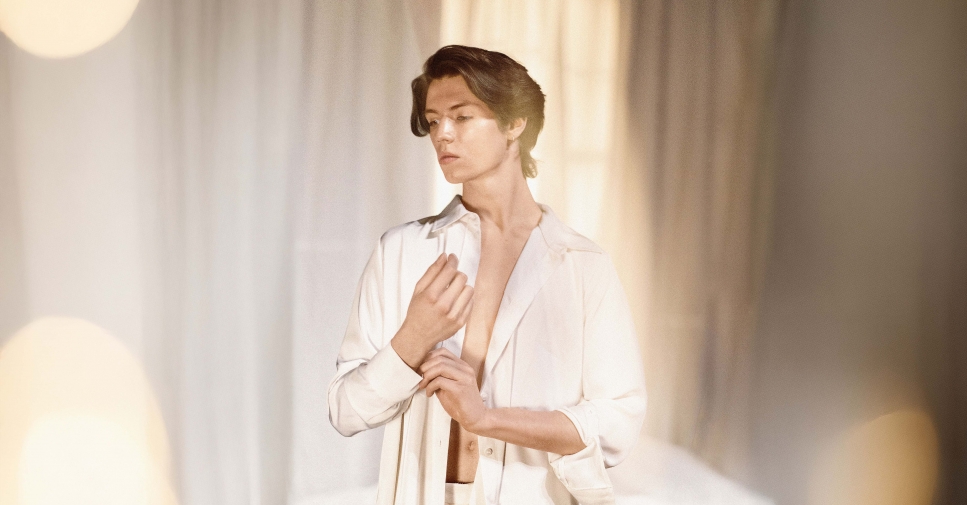
A new production of Richard Strauss’s opera Der Rosenkavalier will premiere at the Latvian National Opera on 8 October. The creative team includes Music Director and Conductor Zbigniew Graca (Poland), Stage Director Viesturs Kairišs, Set and Costume Designer Germans Ermičs, Movement Director Elīna Gediņa, and Lighting Designer Alex Brok (the Netherlands).
The leading roles in the new production will be performed by Tatjana Trenogina or Inna Kločko as the Marschallin, Czech mezzo-soprano Štěpánka Pučálková or Laura Grecka as Octavian, distinguished Austrian bass Günther Groissböck or Rihards Mačanovskis as Baron Ochs, and Inga Šļubovska-Kancēviča or Annija Kristiāna Ādamsone as Sophie. The soloists, Chorus and Orchestra of the Latvian National Opera also take part in the production.
In Richard Strauss’s opera Der Rosenkavalier, comic situations and the lightness of the waltz intertwine with emotional poignancy, allowing the audience to savour an exquisite story of love and the inevitable passage of time, imbued with irony and melancholy. The opera received its world premiere in Dresden on 26 January 1911. Der Rosenkavalier has been staged at the Latvian National Opera only once before, in 1930.
"I have been interested in Richard Strauss’s music since my early years as a student – his music is spontaneous, full of surprises, intuitive, and rich in colour. It represents the culmination of the Romantic era while also anticipating aspects of modernism. Strauss was a genius of composition and orchestration. He had intimate knowledge of each instrument's capabilities, including its most demanding and unusual effects, and made brilliant use of this understanding in his orchestral works. He also had an exceptional talent for writing multiple musical lines simultaneously, creating rich and complex textures. Der Rosenkavalier is a large-scale opera in three acts. The richness of the orchestration, the demanding vocal parts, and the large ensemble scenes all call for time, focus, and a great deal of work. Working with this score is a wonderful experience,” says Music Director Zbigniew Graca.
"It is impossible for us to accept death, because it goes against our admiration for the richness of life and our desire to exist. The Marschallin briefly falls into this kind of psychological madness too, until she accepts that time is inevitable. And that is precisely what I want to affirm: time is inevitable, it moves forward, and we will all die, but that doesn't make life meaningless. In my opinion, the presence of death is exactly what gives life its meaning, because you realise that you have to live each day to the full – it will never again repeat. Ageing is beautiful. The Marschallin lives out a dream – a love for her own youth, embodied in Octavian. The Marschallin lives through this love and then lets it go. There is no beauty in life without tragedy. What remains is a chillingly painful beauty, and it is so precious that one can live with that too,” says Stage Director Viesturs Kairišs of the production.
This season, Der Rosenkavalier will also be performed on 9 and 10 October, 25 and 27 March, as well as during the Riga Opera Festival in June. Tickets are available at the Latvian National Opera box offices and online.
The production is supported by the Latvian National Opera Foundation.